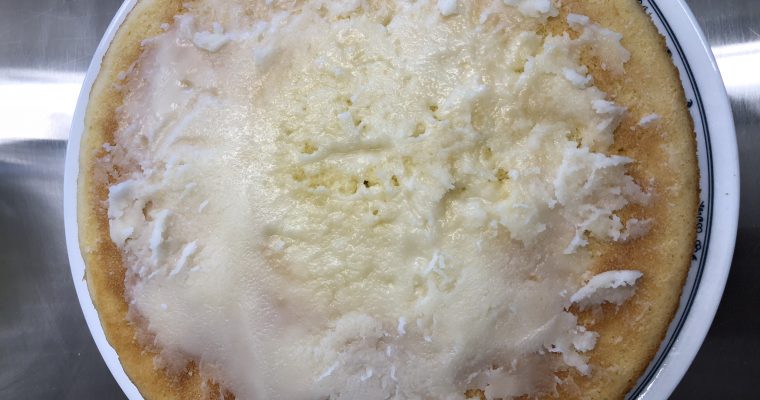
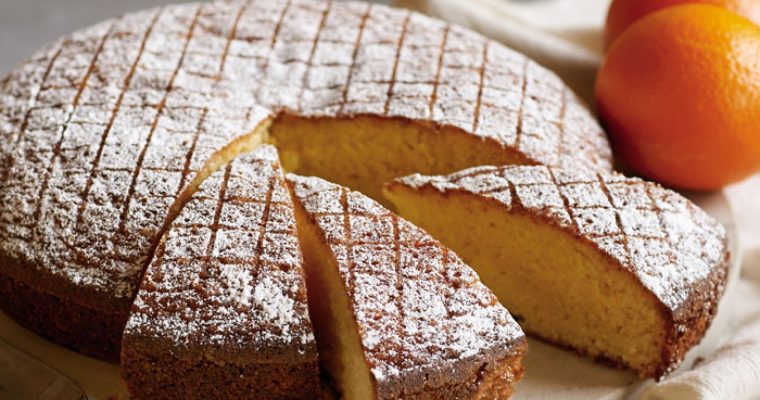
For our olive oil cake, we formulated outcomes for what we expected the color, texture, and flavor would be after it was baked. We decided that the color would be a mix of orange and yellow with an off-white glaze on the top. We also …
Below are some pictures that documented our test run with our Olive Oil Cake & Lemon Glaze. Overall, it was a successful process. The only thing that went unplanned was that we used an extra lemon for zest. When we do this recipe for real …
I always thought of aromatics as something like an air freshener or oil, not something that is edible or can be put in foods. I never realized that aromatics were part of chemistry, being a substance or plant that emits a distinctive smell. In chemistry, I learned that aromatics are little molecules that are also called odorants and are experienced in the nose, not the mouth. Overall, I had a lot of false assumptions regarding aromatics because I had not associated them with Chemistry, meaning that I didn’t know about their physical state and characteristics.
Dish
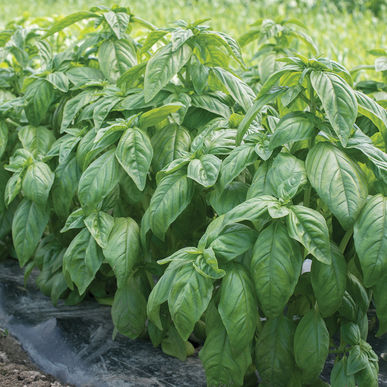
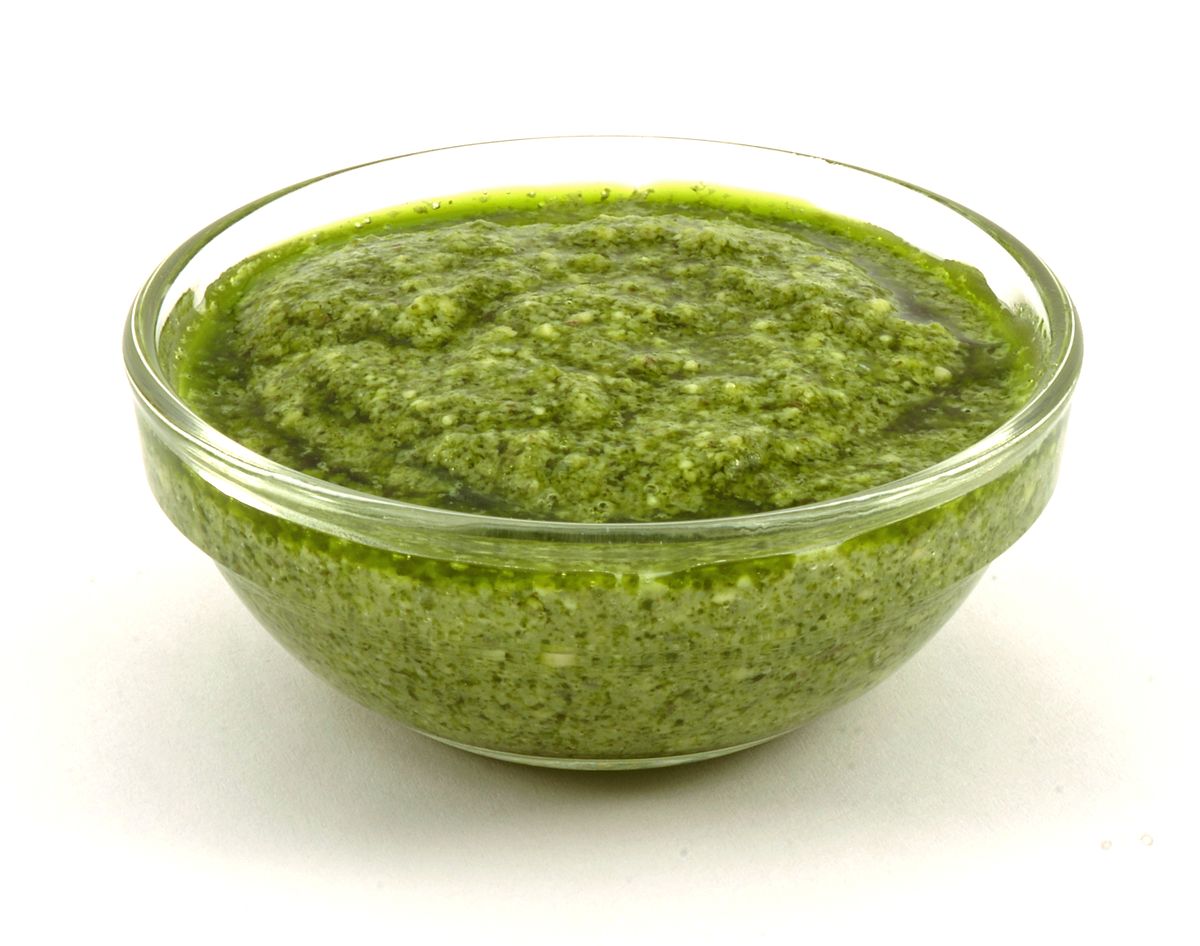
I chose Pesto as my dish because of the central ingredient basil. Pesto is an Italian dish that originated in Liguria, Italy.
Chemical Analysis
Pesto uses basil as the central ingredient in order to create the green colored sauce. Basil is an aroma molecule, more specifically a phenolic. A phenolic is warm, spicy, or sweet with characteristics such as less volatile and water soluble. Volatile molecules readily travel in the air and we can smell them by entering our noses with the air we breathe. Molecules of similar structures will give off similar aromas. The fragrance of the basil creates a rich aroma that covers the pasta.
Cultural Analysis
Basil is a culinary herb from the family Lamiaceae, with a Latin origin for the name. Pesto sauce is usually used on pasta, and was first created during the Middle Ages. Although pesto is a very common dish in Italy, it is different almost everywhere you go. The herbs and spices vary depending on the region of Italy as some use tomatoes and almonds. One of the most famous types of pesto sauce is Pesto Genovese, which first appeared in a Ligurian cookbook in 1863. Based off of this information, I believe that pesto is an important family recipe and can be passed down through generations. Due to its popularity, I think it’s a common and simple dish that many families could call a “comfort food”.
Integration
Similar to the idea that molecules of similar structure give similar aromas, different kinds of pesto sauce have similar outcomes. Although Pesto Genovese and Tomato pesto have different ingredients, they are both a sauce that covers pasta. A “comfort food” usually has a distinct scent and is something that people are accustomed to eating, something that is warm. Pesto sauce is exactly that, a warm sauce that covers hot pasta with a strong aroma of basil.
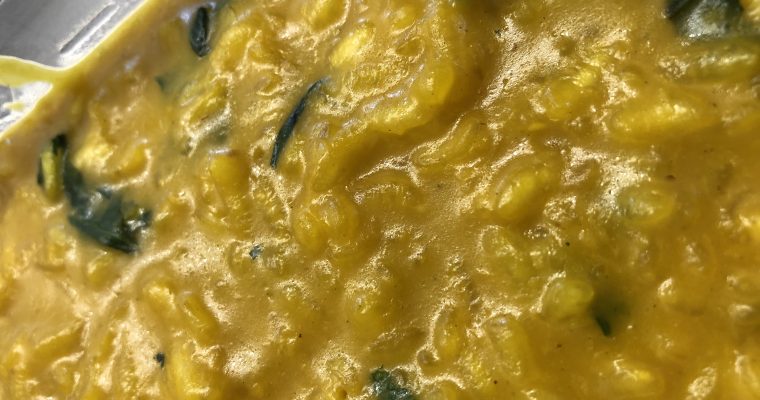
This past week we made Risotto with Saffron & Spinach. Although it was a tough hands-on process, it was worth it! To start, you need the following ingredients: 1/2 medium onion, very finely chopped 1 garlic clove, smashed 4 Tbs. unsalted butter 1 cup arborio rice (this …
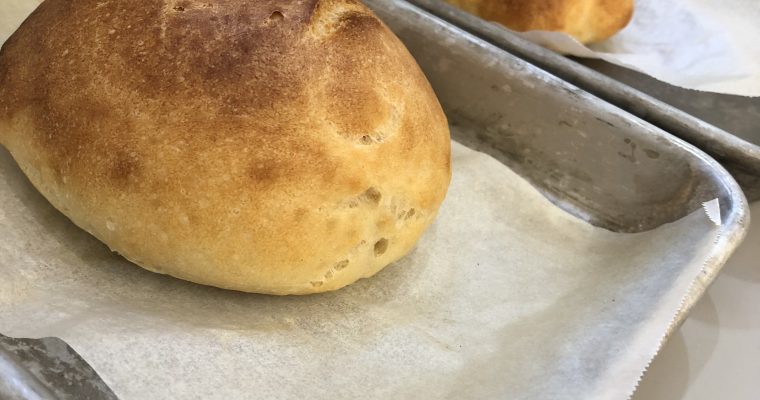
In order to make Ciabatta, you need to make a spongey biga. Here are the ingredients and tools you will need: 1/2 cup all-purpose Flour 1/8 tsp Rapid Rise Yeast 1/4 cup room temp water Sturdy spoon small glass bowl Measuring Cups and spoons plastic wrap To make …
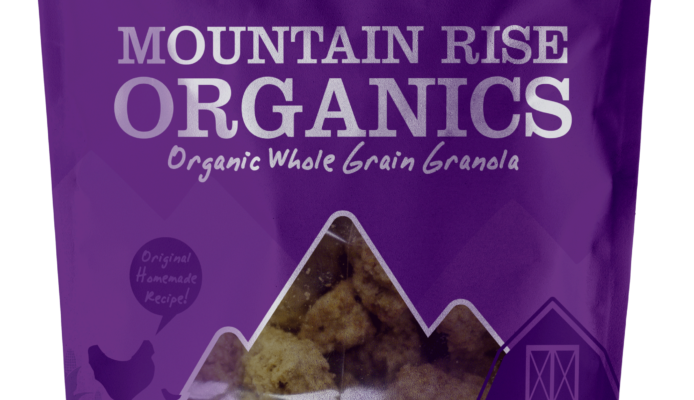
The ingredients in Mountain Rise Granola fall into two different categories: food and additives.
The foods are as follows:
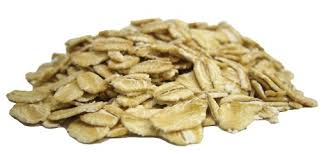
organic oats
organic canola oil
organic cane sugar
fresh milled organic whole wheat
organic cornmeal
organic eggs
water
organic vanilla
sea salt
The additives are:
baking soda (non-irradiated)
baking powder (aluminum free)
The two additives, baking soda and baking powder work as leavening agents. Baking powder has a bigger than baking soda as it is also a pH control agent and an anti-caking agent.
VITAMINS AND MINERALS
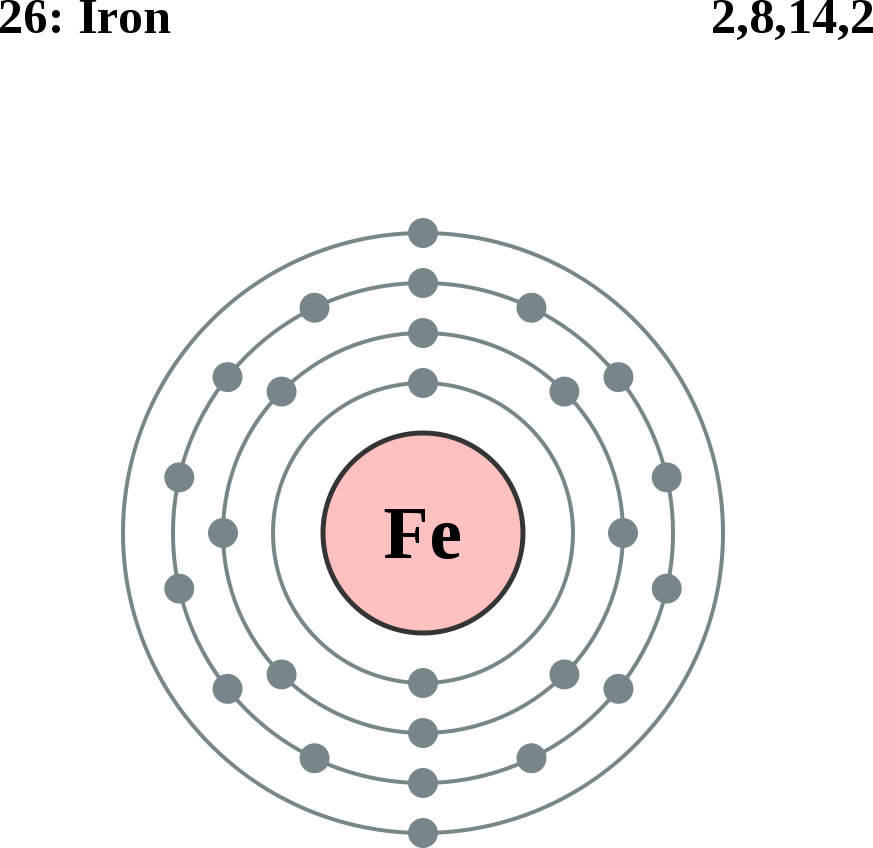
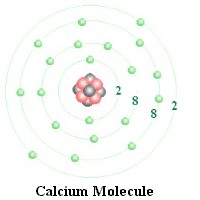
Another aspect of this food is vitamins and minerals. Some of the major minerals in Mountain Rise Granola are Iron and Calcium. According to the the Mountain Rise’s nutrition label, there is 5% iron and 1% calcium in the granola.
Iron Molecule
The FDA Vitamin and Mineral Chart explains that the roles of vitamins and minerals in ones body. Iron is produces energy, growth and development, red blood cell formation among many other important tasks inside the body.
Calcium, on the other hand, is a major concern as many Americans don’t get enough of it. Calcium helps with blood clots, bone and teeth formation, and muscle contraction.
FATS
Mountain Rise Granola contains 6g total fat, with a 9% DV. This specific granola has 0.5g saturated fat, which has mainly single bonds. Saturated fat is not healthy and can lead to heart disease.
CARBOHYDRATES
There are 17g total of carbohydrates in Mountain Rise Granola, with 4.5g being sugar. The majority of the sugars are predictably coming from the organic cane sugar and the organic vanilla. The 2g of dietary fiber are likely soluble due to the main ingredient, oats. Fiber does not contribute calories to our diet.
Starch also has an important role as a carbohydrate by helping create the rough texture and thickening of the granola.
Assumption Before Kitchen Chemistry, I did not consider olive oil as a fat used in cooking. I always thought it was used for flavoring, which it is, but I did not know about the chemical aspects of it. When making something with flour, the olive …
Mountain Rise Granola is a food that I always have in my pantry at home. It’s great for breakfast or for a quick snack. Keep reading to learn more about the protein and fat content in my favorite granola! The nutrition label and ingredients of …
Making Mozzarella sounds a lot harder than it actually is, but you have to be careful to follow the steps very diligently. To make Mozzarella, you’ll need the following ingredients:
1/2 and 1/8 cup bottled (NOT TAP) distilled water
1/2 gallon milk, raw, pasteurized whole or pasteurized 2%, not ultra-pasteurized.
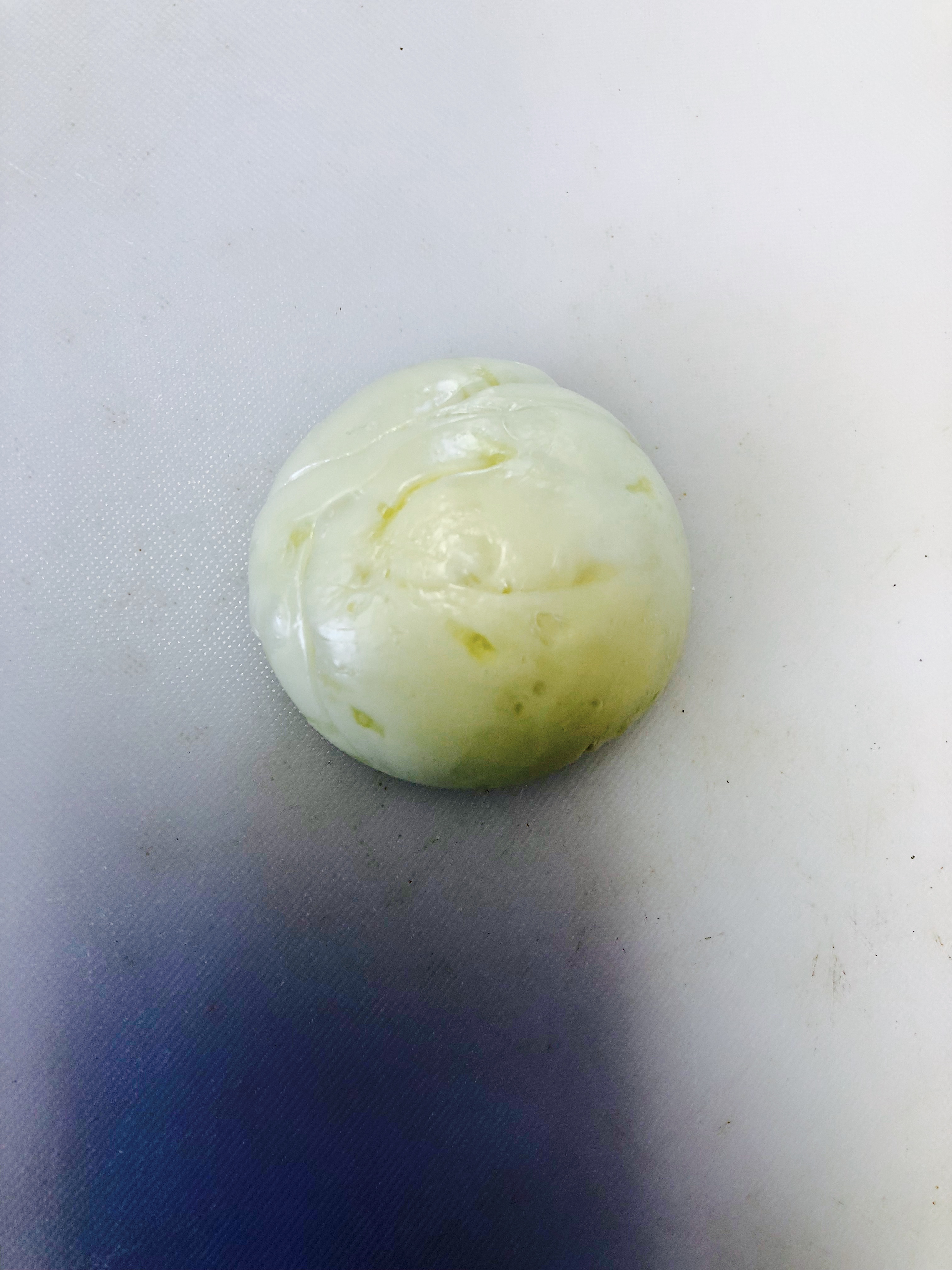
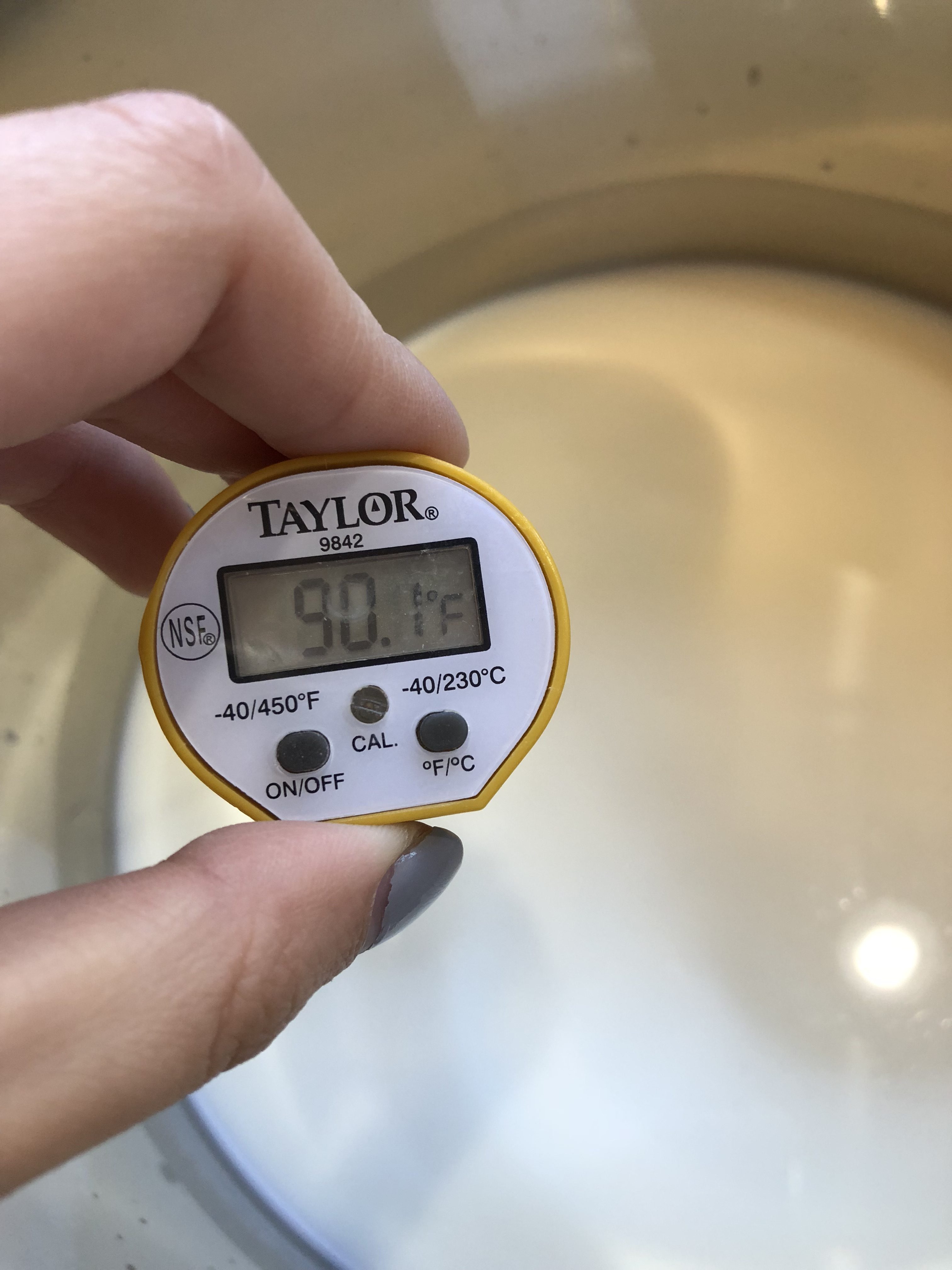
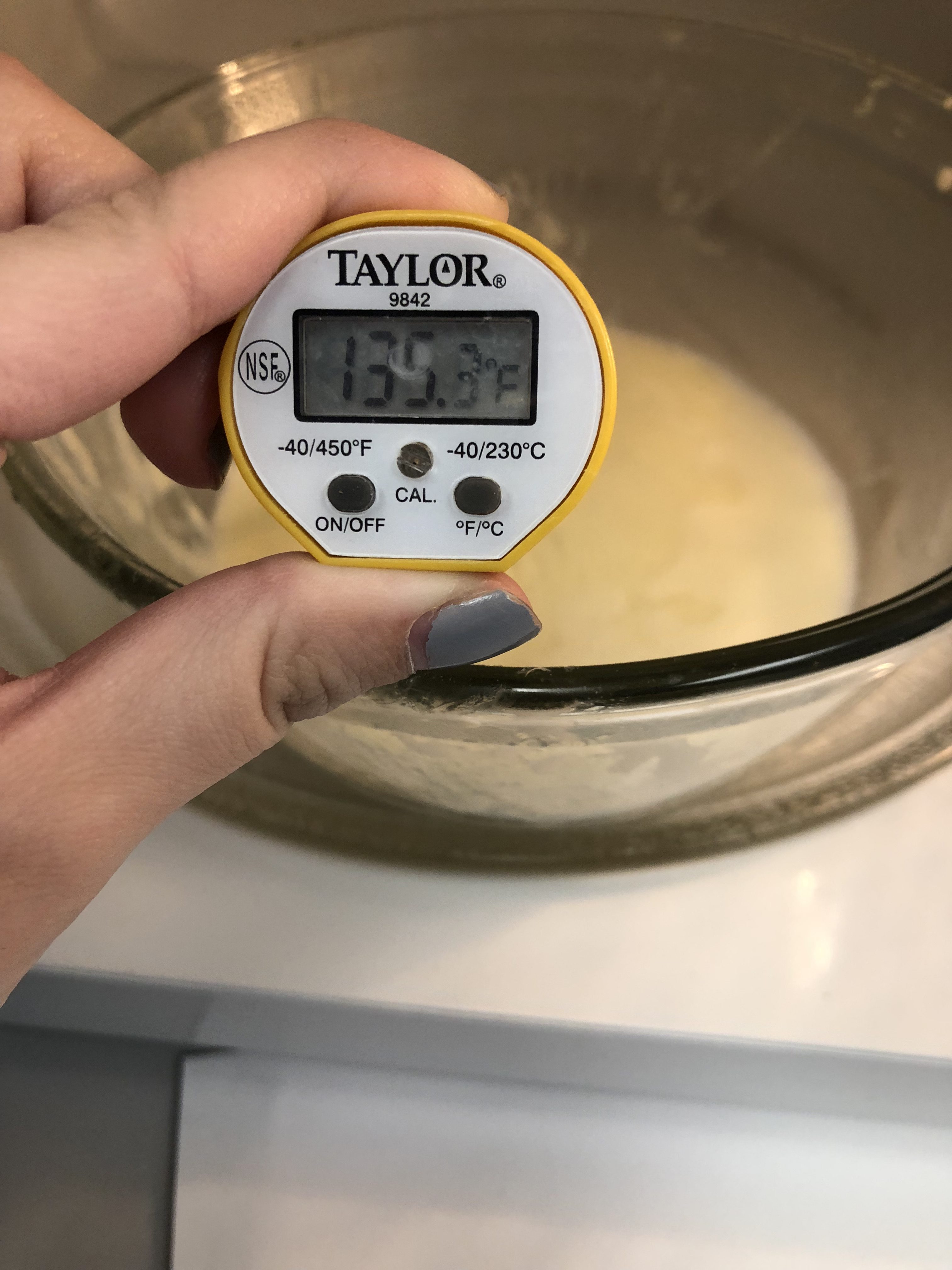
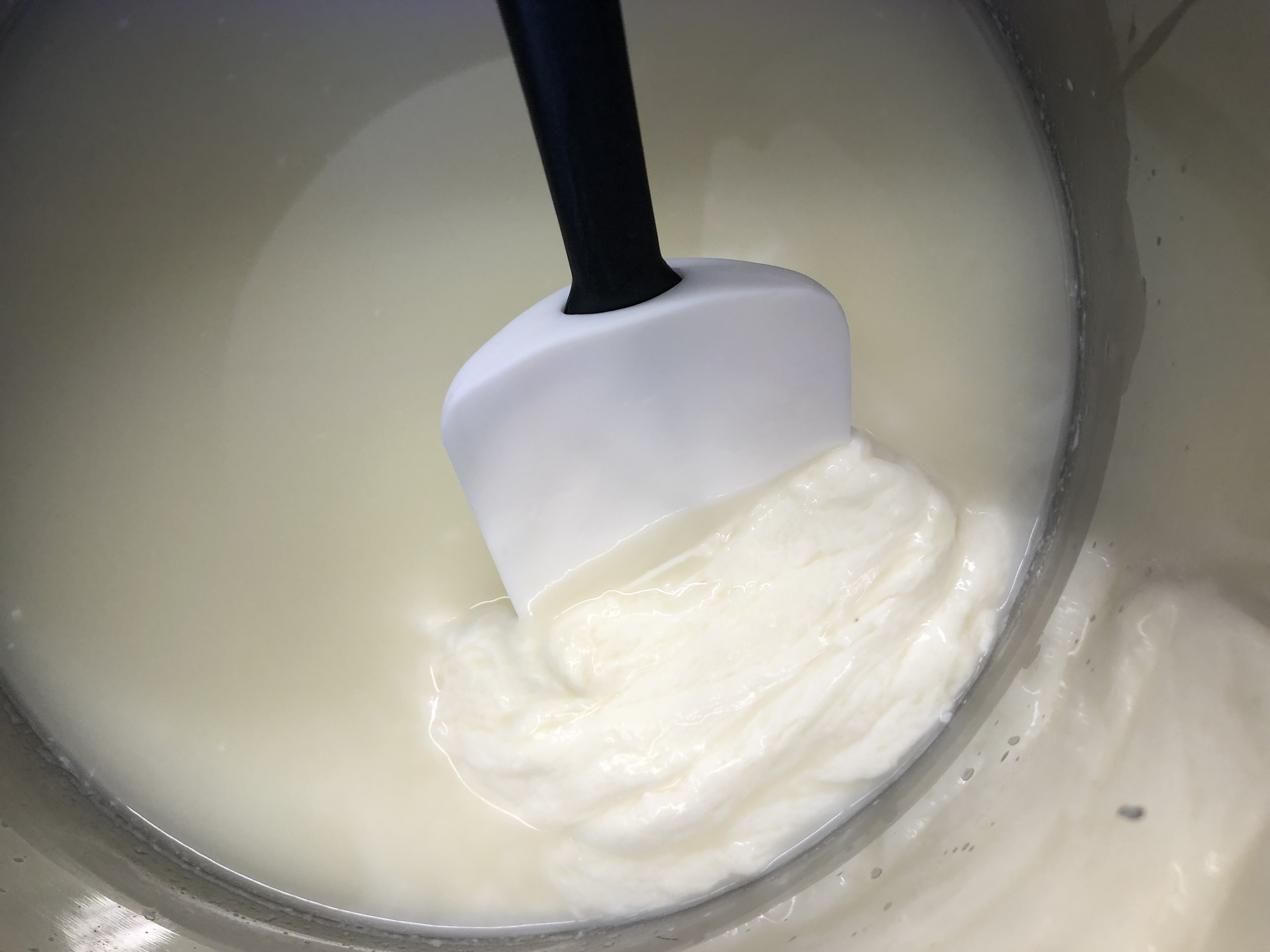
Our process of making Mozzarella Cheese went pretty smoothly until it came to step 8 when we microwaved the curds too much and they melted. We took very diligent steps while cooking the curds to make sure they were at the appropriate temperatures.
Warming the milk to 90 degrees.Microwaving the curds to 135 degrees.
During step 8, we didn’t realize the curds were melted so when we put them back in the strainer, a good majority of the curds dripped through into the whey. Luckily, the curds had already separated from the whey in previous steps so it was not hard to recover the curds that fell back into the pot with the whey.
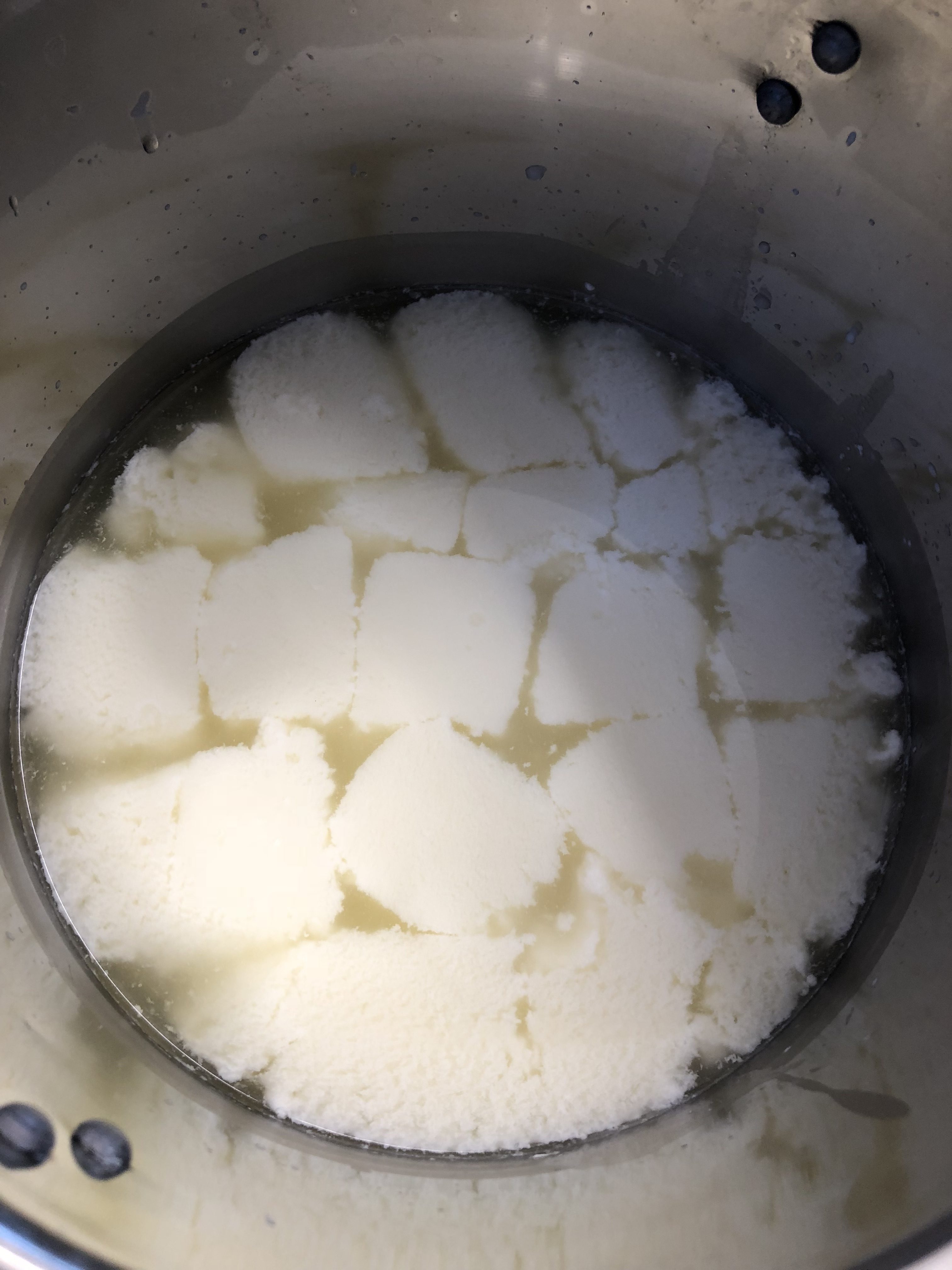
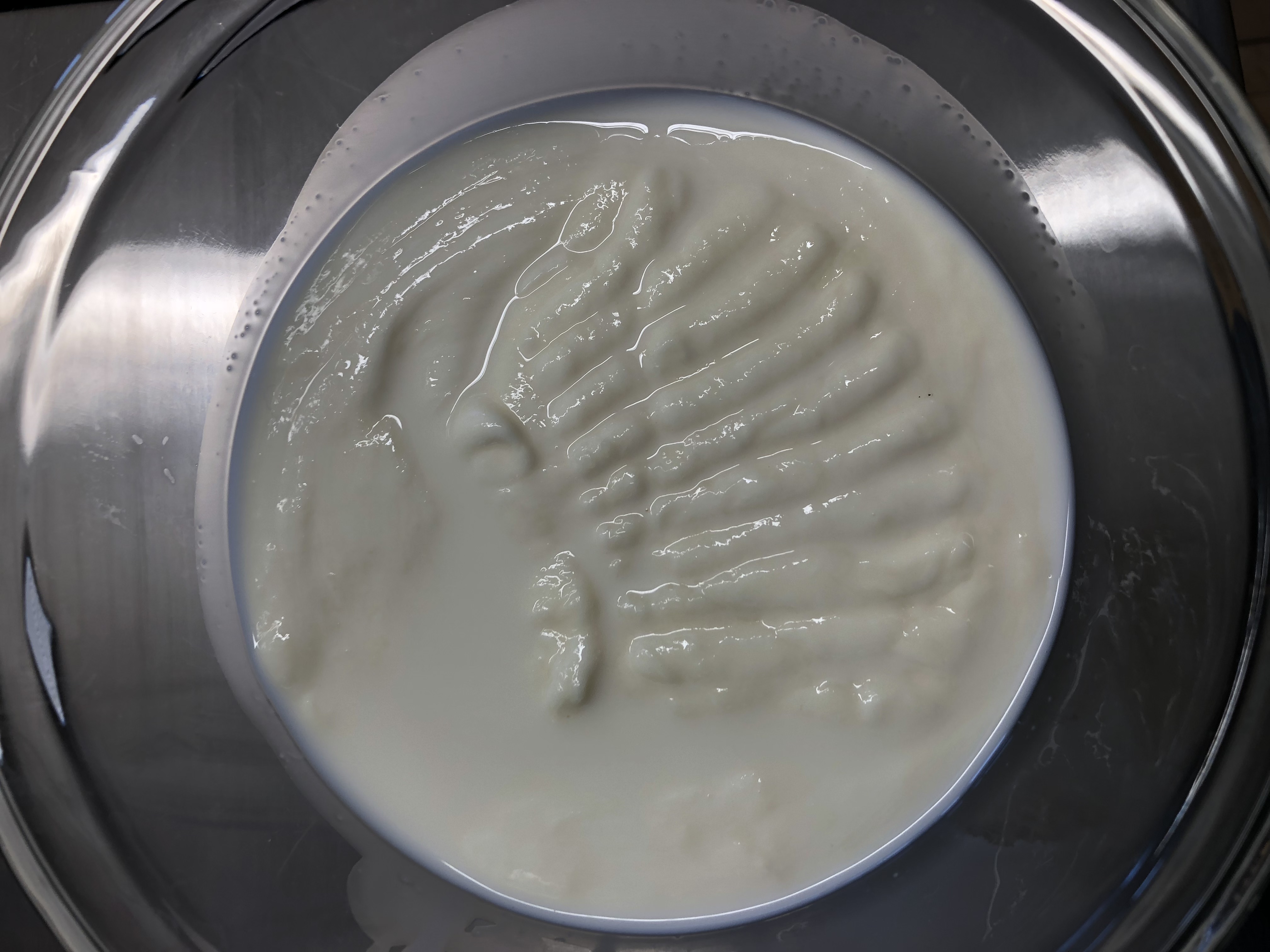
Curds and whey are the lumps and liquid found in cottage cheese. Curds are formed from acidic substances which lower the pH of milk and causes it to form into solid chunks during the process of coagulation. When acid is added to milk, the casein proteins denature and coagulate. Whey is the soluble liquid that forms from the curd after coagulation.
Curds and WheyFormation of the CurdsCurds after being strained
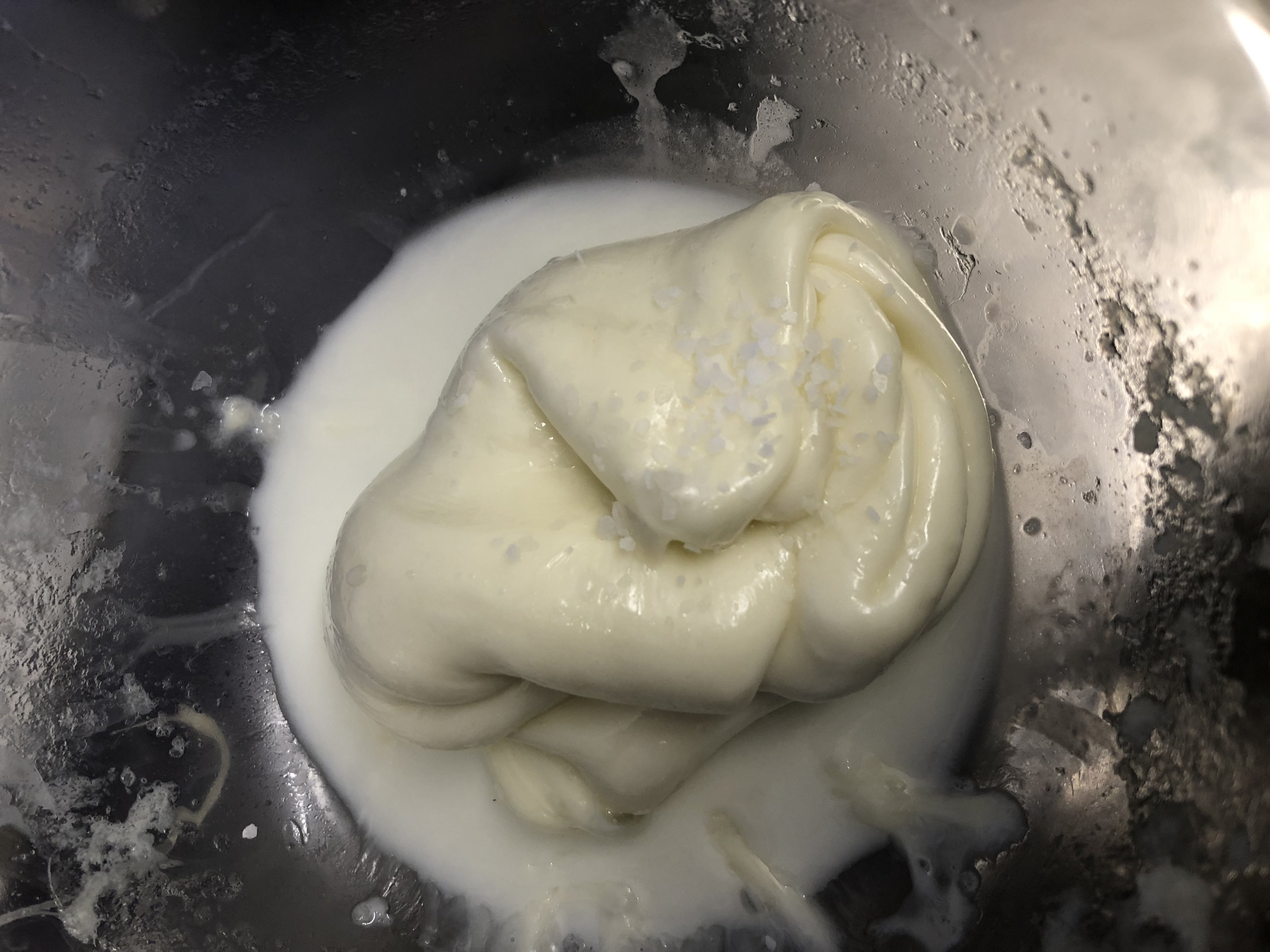
Once the curds were ready to be stretched and shaped into Mozzarella, we added salt for flavor.
Curds with Salt
In other words, there was acid added to milk in order to form curds of casein and whey so that the curds could be used to make the mozzarella cheese.
The ingredient Rennet is an enzyme that is needed to make cheese. It can come from either the stomach of baby cows or vegetables. Rennet is added because it cuts the negative charged tails off of casein so casein can then coagulate.
Cheese made with raw milk has more flavor than cheese of made with pasteurized milk. Making cheese with raw milk can make different shapes and textures from crumbly, oozy, or firm.
For more on our experience with the taste and texture of our mozzarella cheese, check out the videos below!
1. Assumption Before this cluster, I was very unfamiliar with the process of Chemistry in making food. I didn’t realize that gluten was something that had to be formed in a recipe, nor did I realize that adding a fat such as oil or butter …